
No products in the basket.
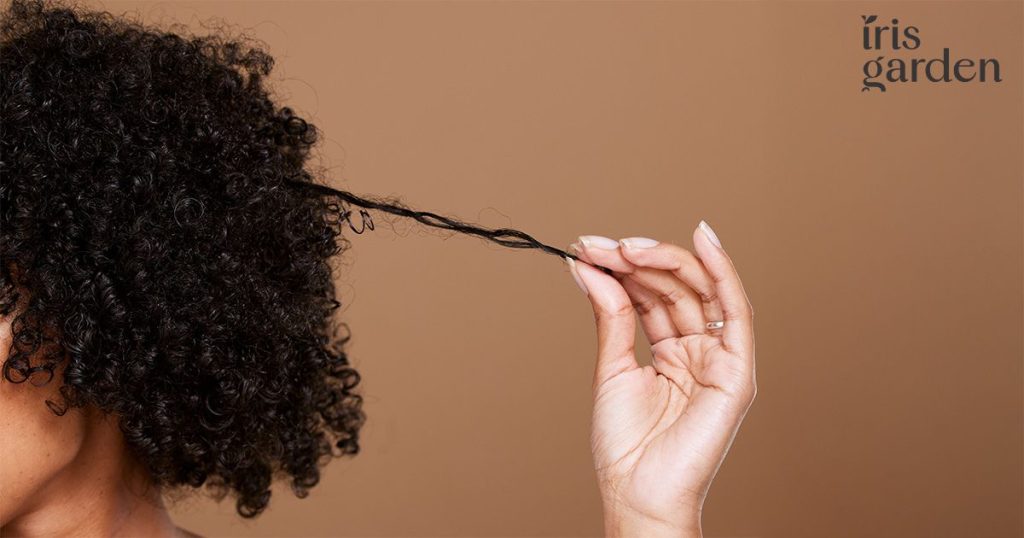
Curly hair is trending everywhere these days. Be it on social media or in real life, people who used to hide their curls are now showing them off proudly. Many are curious about how to care for their natural waves. This type happens when it grows in twists and coils instead of falling straight. It behaves differently from straight hair and needs extra attention. That is why learning how to treat it properly is so important.
This change in attitude makes people want to understand their curls better. The coils need more moisture and gentle handling. Moreover, it can tangle and break easily if treated roughly. In this article, we will explore different curl types and show you how to spot yours. You will also find how to bring out your ringlets with tips on choosing the essential haircare products.
What is curly hair?
Curly hair is the type where strands grow in spirals, ringlets, or corkscrews instead of lying flat. People with this type of hair often have more volume and bounce, but it can feel drier and frizzier than straight one. Generally, it appears in all ethnicities, though curl tightness varies. Genetics play a big role, so curls often run in families. Curl types range from loose waves to tight coils, which we will explore in detail later.
Because of its twists, curly hair behaves differently from straight strands. Its follicles are oval or asymmetrical, making fibres bend as they grow. Oils from the scalp travel less easily down hair, so they need extra moisture. It also shrinks and stretches differently and reacts more to humidity. Understanding these traits helps in learning how to care for and style it properly.
The 3 types of curls
Understanding different curl types is key to proper care. Most hair falls into three main categories: wavy, curly, and coily. Wavy forms gentle S-shaped strands. Curly hair twists into more defined spirals. Coily coils tightly, often with springy, zigzag patterns. Each type behaves differently, so what works for one may not work for another. That is why knowing your type matters.
These main types also have subtypes to show small variations in curl size, tightness, and texture. Differences in follicle shape, strand thickness, and shrinkage create unique needs for moisture, styling, and trimming. Recognising your curl pattern helps prevent dryness, breakage, and frizz. Now, let’s look at each type more closely so you can learn the best ways to care for your curls.
Wavy
Wavy hair is that in-between type, not quite straight but not fully curly hair either. It makes soft S-shaped strands that bounce from mid-lengths to the ends, while the roots usually stay straighter. It can frizz a bit more than straight type, but it’s easier to manage than full coils. Wavy has three subtypes called 2A, 2B, and 2C that differ in wave strength, volume, and moisture needs. Each type responds differently to products and styling, so knowing your wave helps keep it smooth, lively, and frizz-free.
Curly
Curly hair features true spirals or ringlets from root to tip, making it more three-dimensional than wavy. Type 3 curls have subtypes: 3A, 3B, and 3C. All differ in curl size, density, dryness, and frizz resistance. All type 3 shares high volume at the roots, moderate shine, and strong reactions to humidity or dryness. They shrink 25 to 50% when dry and need frequent hydration since scalp oils struggle to reach the ends. So, it is recommended to apply an organic moisturizer Sri Lanka haircare.
Coily
Coily is the tightest and most compact curl type, with strands that twist into sharp coils or zigzags. When coily hair is dry, it can shrink a lot. Thus, making it look much shorter than it really is. Only when it’s wet or stretched can you see its full length. Type 4 is naturally drier and more fragile because oils struggle to travel down the twists. It usually grows outward, creating lots of volume. Just like the other, there are three main subtypes: 4A, 4B, and 4C, and each has its own coil shape, definition, and texture.
Ways to identify curl type
Figuring out your curl type can be tricky, especially if your curly hair shows a mix of waves, curls, or coils. Many people aren’t sure whether they have wavy, curly, or coily type. If you use the wrong products or styling methods, it can make hair look frizzy or limp. Observing your hair closely and understanding their natural pattern is the first step to caring for them properly.
Fortunately, there are simple ways to identify your curl type at home. You can do tests like letting your strands air-dry without product, checking how much they shrink, or seeing how easily they form spirals. Other signs include strand thickness, texture, and reaction to humidity. To make it easier, here are some practical things you can do to figure out your curl type and understand your hair better.
- Wash and condition your curly hair, then let it air-dry without brushing. See what pattern naturally forms.
- Take a small strand and wrap it around your finger. If it coils and holds, it’s likely curly or coily.
- Check when wet: waves lie flatter, coils form 3D spirals, and coils make tight corkscrews or zig-zags.
- Notice shrinkage; if it looks much shorter dry than wet, it’s probably coily.
- Pay attention to frizz and texture. The curly type reacts to humidity, the coily one needs more moisture, and the wavy one is easier to smooth.
How to bring out curly hair naturally
To bring out curly hair naturally, focus on enhancing your own pattern without relying on heat or harsh chemicals. Doing so allows your curls to look full, bouncy, and well-defined while staying healthy from root to tip. You won’t need expensive products or fancy tools, just the right techniques and a bit of patience. Over time, this approach can make your natural texture shine and feel more manageable than constantly forcing hair with styling devices.
It may take a little effort at first to learn the proper routines and products for your curl type, but the results are absolutely worth it. Seeing your natural pattern form beautifully without damage is far more satisfying than using a curling iron every day. Consistent care encourages healthier strands, reduces frizz, and reveals the full potential of your natural coils, making styling simpler in the long run.
In this section, we’ll cover practical ways to boost your natural curls, from washing techniques and in-shower routines to styling methods that enhance definition. You’ll also learn how to maintain moisture, refresh hair between washes, and protect it while sleeping or during daily activities. By following these steps, you can bring out your ringlets in their healthiest, most defined, and naturally beautiful state.
Reset your hair
To bring out your curly hair naturally, start by resetting it. Switch to a sulphate-free shampoo and silicone-free conditioner so your hair aren’t stripped or weighed down. Once a week, use a clarifying or chelating wash to remove buildup from products or hard water. Sulphate-free formulas keep natural oils in place, and silicone-free conditioners hydrate without coating strands. After a week or two, your curls start to pop, revealing their true pattern, smoother and more defined.
In-shower routine
Curly hair loves tender loving care in the shower. Only detangle when strands are soaking wet and slippery with conditioner, using fingers or a wide-tooth comb from ends to roots. While still dripping, scrunch water and a bit of conditioner or gel into your lengths to form clumps that follow your natural bend. This keeps frizz at bay, protects fragile strands, and helps your coils stick together so they dry bouncy, defined, and full of life without any heat.
Styling to enhance the pattern
Contrary to straight type, styling curls while they’re very wet makes a huge difference. Start with a light leave-in or curl cream, then add mousse or gel in sections, raking or scrunching upward to form clumps. Try “plopping” with a cotton T‑shirt or microfibre towel for 10–20 minutes to lock in shape without frizz. This method helps your natural pattern set in place, giving bouncy, defined waves that last longer and stay soft without daily heat.
No-heat curl methods
You don’t need irons to give your curly hair extra spring. Try braids, twists, or bantu knots on damp hair overnight, or set small sections around your fingers or soft rollers and let them air-dry. These tricks reshape strands while keeping them healthy, enhance natural waves or coils, and lock in definition without frizz. It takes some patience, but your curls will wake up looking fuller, bouncier, and ready to show off.
Protect and maintain
Keep your hair looking its best by protecting it while you sleep and in your routine. Sleep on a silk or satin pillowcase and try a loose pineapple ponytail to reduce friction, prevent flattened sections, and lock in moisture. Getting regular trims and doing deep conditioning sessions might feel like extra effort, but they really pay off. Snipping off split ends and giving your hair a moisture boost helps your ringlets stick together instead of frizzing out or snapping. Stick with it, and your natural curl pattern will look healthier, bouncier, and way more defined.
Essential curly hair products recommendation
With so many curly hair products on the market today, it’s easy to feel overwhelmed. From leave-ins to gels, creams, mousses, and oils, each promises to enhance your curls. However, not all of them are actually necessary. Using too much product can backfire. It can weigh hair down, cause buildup, and even make frizz worse. Focusing on what’s truly needed helps your strands stay healthy.
The good news? You don’t need a ton of products for bouncy, defined hair. A few key items, used correctly, can boost moisture, control frizz, and make your natural pattern pop. In this section, we’ll highlight the essential products you should have in your routine, so you know what to prioritise and how each one benefits your waves, curls, or coils. Here are the must-have products to keep your hair at its best:
- Sulphate-free shampoo: Gently cleanses without stripping natural oils; ideal for all curly hair.
- Rinse-out conditioner: Detangles and smooths cuticles in-shower; essential for maintaining definition in wavy (2) to coily (4).
- Deep conditioner: Weekly hydration boost to restore elasticity and reduce breakage; essential for curly (3) and coily (4).
- Leave-in conditioner: Lightweight moisture and slip for styling; essential for all curly hair types.
- Curl cream: Adds softness and clump definition; best for wavy (2A–3B) hair.
- Gel or mousse: Provides hold without crunch; mousse for wavy (2) volume, gel for curly (3) and coily (4) definition.
- Oil or serum: Seals ends and tames frizz; particularly helpful for tighter curls (3C–4C).
Start with these essentials, layer light-to-heavy on wet hair, and adjust depending on your curl type and moisture needs.
Unlock your hair’s true potential with Iris Garden!
Curly hair comes in many shapes, textures, and patterns, each with its own needs and quirks. With the right care, gentle styling, and consistent hydration, you can enjoy healthy, defined curls that shine and move naturally. Understanding your curl type, using the right products, and following simple routines will help your hair look its best without relying on heat or harsh treatments.
After exploring how to care for and enhance your curly hair, you can elevate your self-care routine with Iris Garden. Our plant-based, dermatologist-designed skincare and haircare respect both your body and the planet. Hence, offering nourishing solutions that complement your natural beauty. From hydration to protection, we make daily rituals feel like acts of self-respect, helping you look and feel your best every day. Visit our homepage for more information!
Previous Article
Skin Texture: Causes, Types, and How to Improve ItNext Article
Face Cream Guide: Everything You Should Know